

Hey Chicago architecture fans!
If you live in the city, you walk past world-famous buildings every single day, and most of us barely even take a moment to appreciate them. This week, we thought it was worth digging into the story behind Chicago’s unique architecture.
Before we get going, we’re the Ben Lalez Team, and we’ve spent over a decade helping people buy and sell homes all around Chicago. One thing we hear all the time from people moving here is that they’ve never been anywhere that feels quite like this city.
A lot of this goes back to how the city was built, so let’s get into it!
It All Started With A Fire
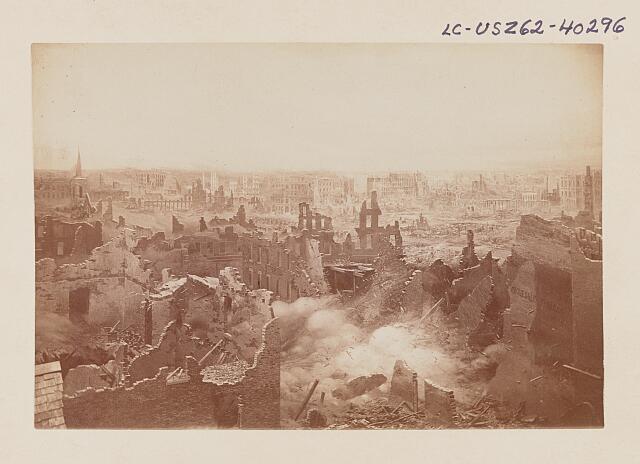
From the Library of Congress: https://www.loc.gov/pictures/resource/ds.14600/
You can’t talk about Chicago architecture without starting in October 1871.
The Great Chicago Fire burned for two days, wiping out 3.3 square miles of the city. Around 17,500 buildings were destroyed, and more than 100,000 people became homeless.
The city had to rebuild 17,500 buildings in a hurry, and instead of using old designs, Chicago decided to try something different. At the time, the city was growing faster than almost anywhere in the country, and it had money to spend.
The best architects of the era showed up because this was the only place willing to let them actually try things. Paris or Boston wasn’t going to let them experiment. But Chicago had no choice but to figure it out from scratch. That’s why we got the skyscraper and everything that followed.
The Chicago School: Where The Skyscraper Was Born
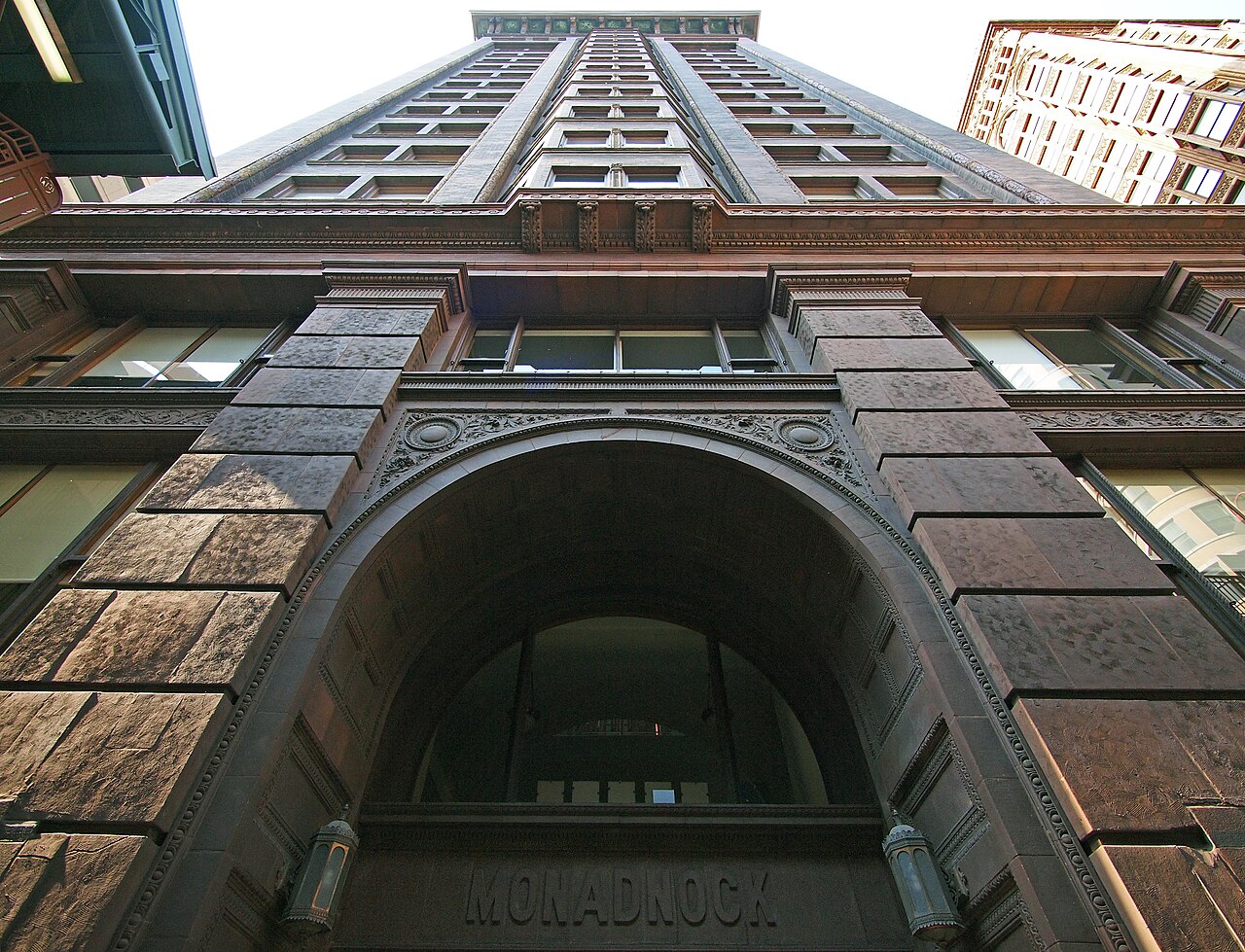
By JohnPickenPhoto from Chicago, USA – Monadnock Building, Chicago, CC BY 2.0, https://commons.wikimedia.org/w/index.php?curid=129115846
In 1885, William Le Baron Jenney finished the Home Insurance Building at the corner of LaSalle and Adams. At 10 stories tall, it was the first building in history built on a steel frame rather than thick masonry walls.
At that time, taller buildings needed thicker walls at the base. This meant typically 6 to 8 feet of solid masonry on the ground floor, just eating up usable space. Jenney decided to move the load to an interior steel skeleton instead, and all of a sudden, you could build up without building wide.
Chicago became the birthplace of the skyscraper.
The Monadnock Building on West Jackson is another landmark from this era, completed in 1891. It’s 16 stories high and holds the record for the tallest load-bearing brick building ever constructed. Its walls at the base are 6 feet thick, which is exactly why nobody ever tried to build a masonry tower taller than this one. It was basically the proof of concept that Jenney’s steel-frame approach was the only practical way forward.
The Rookery Building at 209 South LaSalle was finished in 1888 by Burnham & Root. Frank Lloyd Wright later renovated the interior atrium in 1905. The exterior is dark and heavy. The interior is airy and intricate. The contrast is remarkable, and it’s open to the public.
Louis Sullivan And “Form Follows Function”
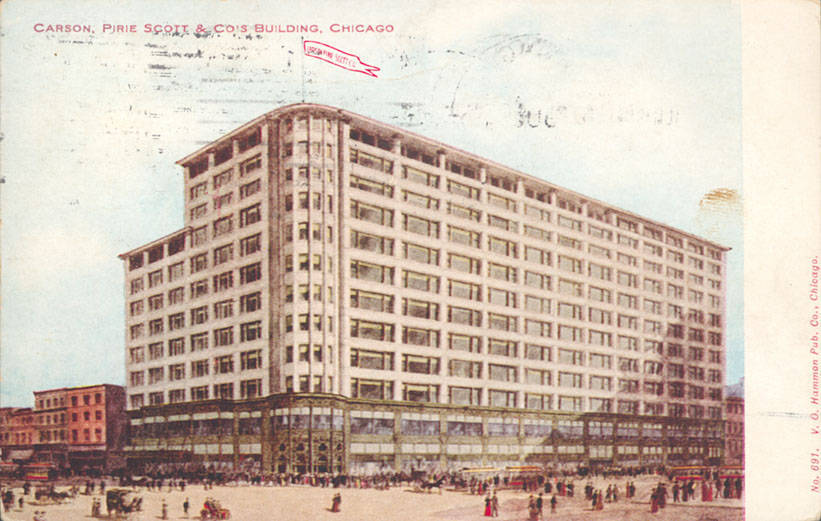
By Unknown author – https://collections.carli.illinois.edu/cdm/singleitem/collection/nby_teich/id/417543, Public Domain, https://commons.wikimedia.org/w/index.php?curid=67087946
The Chicago School came with a philosophy from one man: Louis Sullivan.
Sullivan’s big idea was “form follows function,” the idea that a building’s design should grow directly from its purpose rather than from decoration slapped on top.
What’s amusing is that Sullivan’s own buildings are covered in incredibly intricate detail. His ornamental ironwork and terracotta are some of the most elaborate you’ll see in this city. We think what he meant was that the decoration should make sense, that it should match the building’s logic rather than contradict it. His Carson Pirie Scott building on State Street is a good example of this. The structural grid is clearly visible, and the elaborate decorative panels at the base frame the storefront in a way that makes commercial sense.
Sullivan mentored Frank Lloyd Wright, and this is where the story goes next.
Prairie Style: Frank Lloyd Wright’s Response To The Midwest
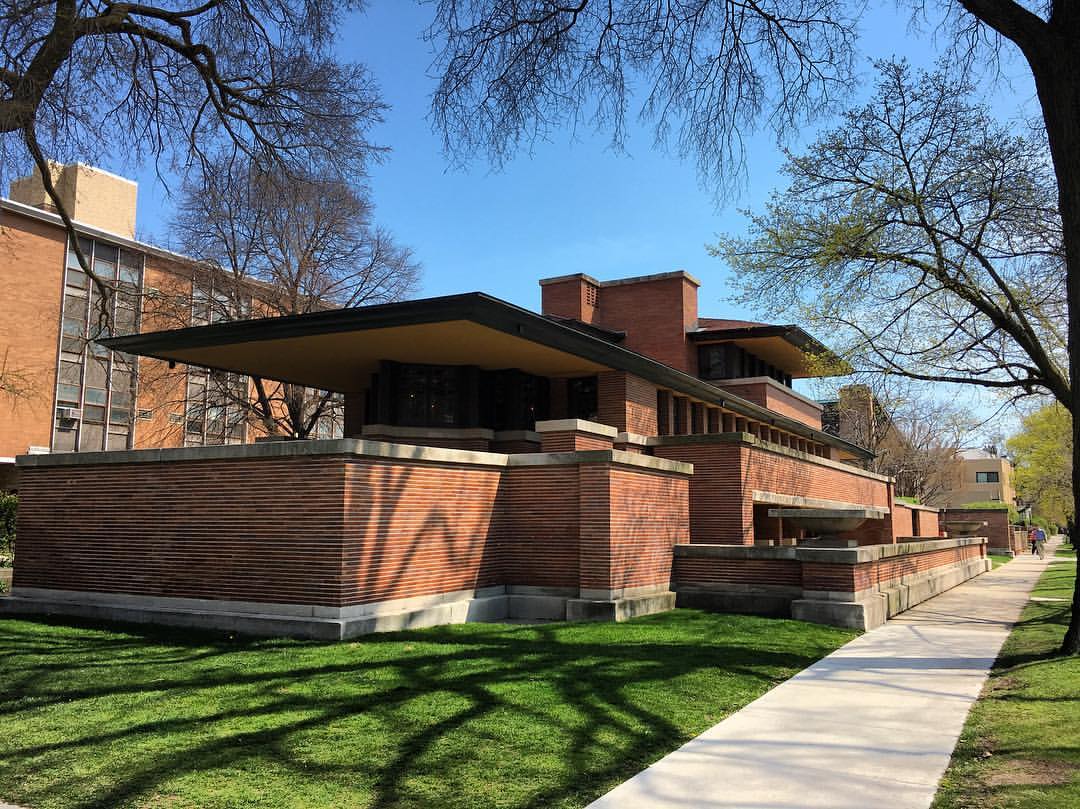
By grego1402 – La prairie house de #franklloydwright #chicago #robiehouse, CC BY 2.0, https://commons.wikimedia.org/w/index.php?curid=129990075
Wright didn’t stay in Chicago long. He eventually moved out to Oak Park, which is where most of his early work happened, and his thinking went in a direction that was distinctly his own.
Prairie Style is horizontal with low, flat rooflines, wide eaves that overhang way past the walls, and windows in long, continuous bands. The whole idea was that a building should look like it belongs to the Midwestern landscape.
The best example in Chicago is the Robie House at 5757 South Woodlawn Avenue in Hyde Park, finished in 1910. The main floor sits off the ground on a raised base, with the roofline extending past the walls in every direction, and the whole structure running parallel to the street rather than facing it head-on. It’s genuinely unlike anything else built at the time.
If you’re interested, they run 90-minute tours. Wright’s early residential work is easier to understand in person than in photographs, so if you’re a history or architecture fan, it’s a good place to check out. More information can be found here.
Art Deco: Chicago’s Most Photographed Era
By Joe+Jeanette Archie – 1952-CM02019, CC BY 2.0, https://commons.wikimedia.org/w/index.php?curid=52779263
By the 1920’s, the city was growing fast, and money was flowing. That produced some of the most recognizable buildings in downtown Chicago.
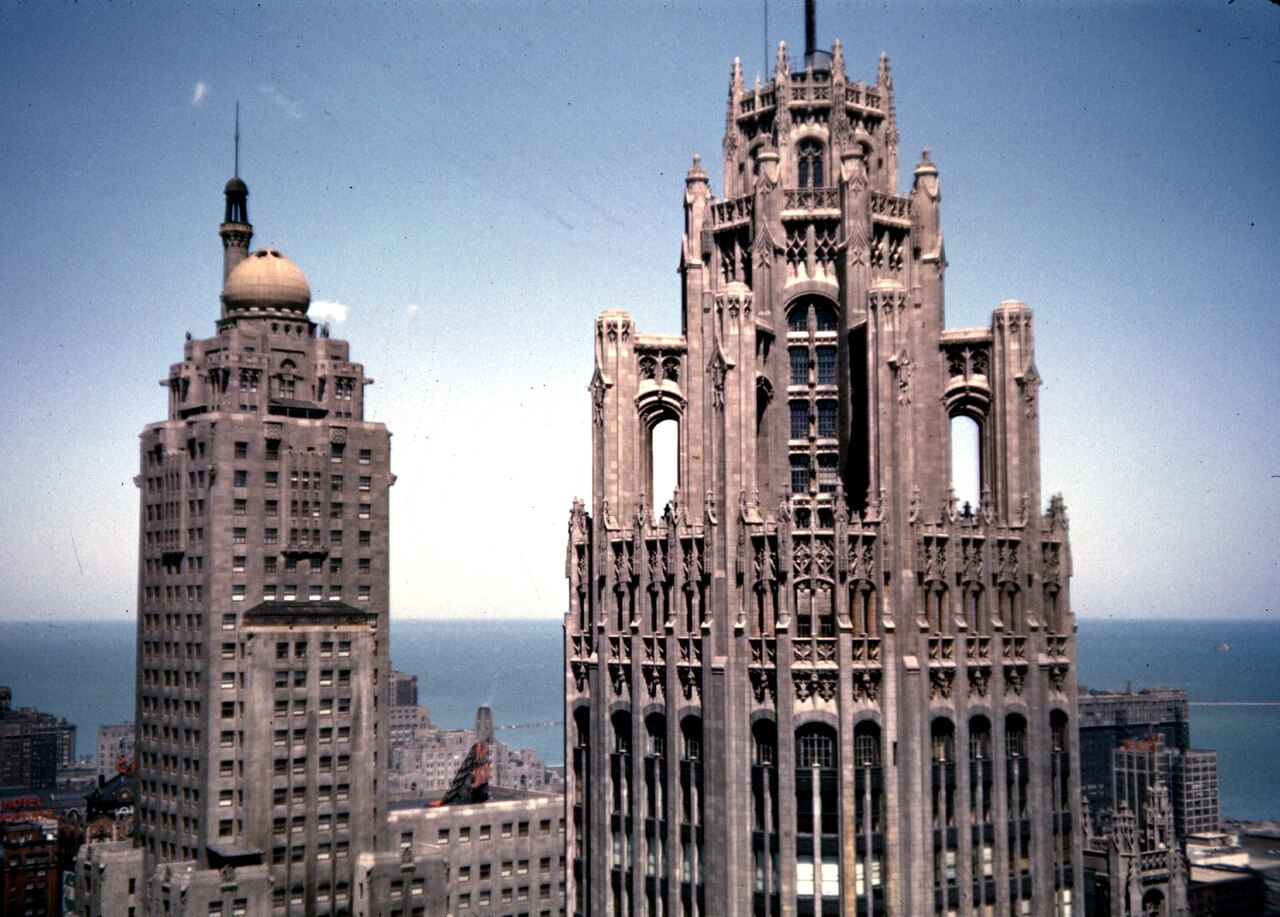
The Tribune Tower at 435 North Michigan Avenue was finished in 1925. The Chicago Tribune ran an international design competition in 1922, and the winning entry from architects John Mead Howells and Raymond Hood was a Gothic tower with Art Deco bones. The end result looked like a cathedral that someone decided to turn into an office building.
If you’ve walked past the Tribune Tower, here’s something you might not have known. Embedded in the base of the tower, there are fragments from more than 120 famous buildings around the world. Pieces of the Parthenon, the Great Wall, Westminster Abbey, the Taj Mahal, the Alamo, the Berlin Wall, and Notre Dame are just a few. They’re all mortared directly into the lower exterior walls. Colonel Robert McCormick, who ran the Tribune, asked correspondents around the world to ship him rocks, and they did. If you walk along the base slowly, you’ll find the plaques.
The Chicago Board of Trade at 141 West Jackson, finished in 1930, is the other Art Deco landmark worth knowing. At the very tops sits a 45-foot aluminum statue of Ceres, the Roman goddess of grain. She has no face, because the architects figured nobody would ever be high enough to see her features clearly. At the time, no building in the city was taller than the Board of Trade.
Mies van der Rohe: Less Is More, And He Meant It
By Marc Rochkind – Own work, CC BY-SA 4.0, https://commons.wikimedia.org/w/index.php?curid=57520545
Ludwig Mies van der Rohe fled Nazi Germany in 1938 and settled in Chicago, where he became the director of the architecture program at the Illinois Institute of Technology. His influence on Chicago, and on modern architecture globally, is hard to overstate.
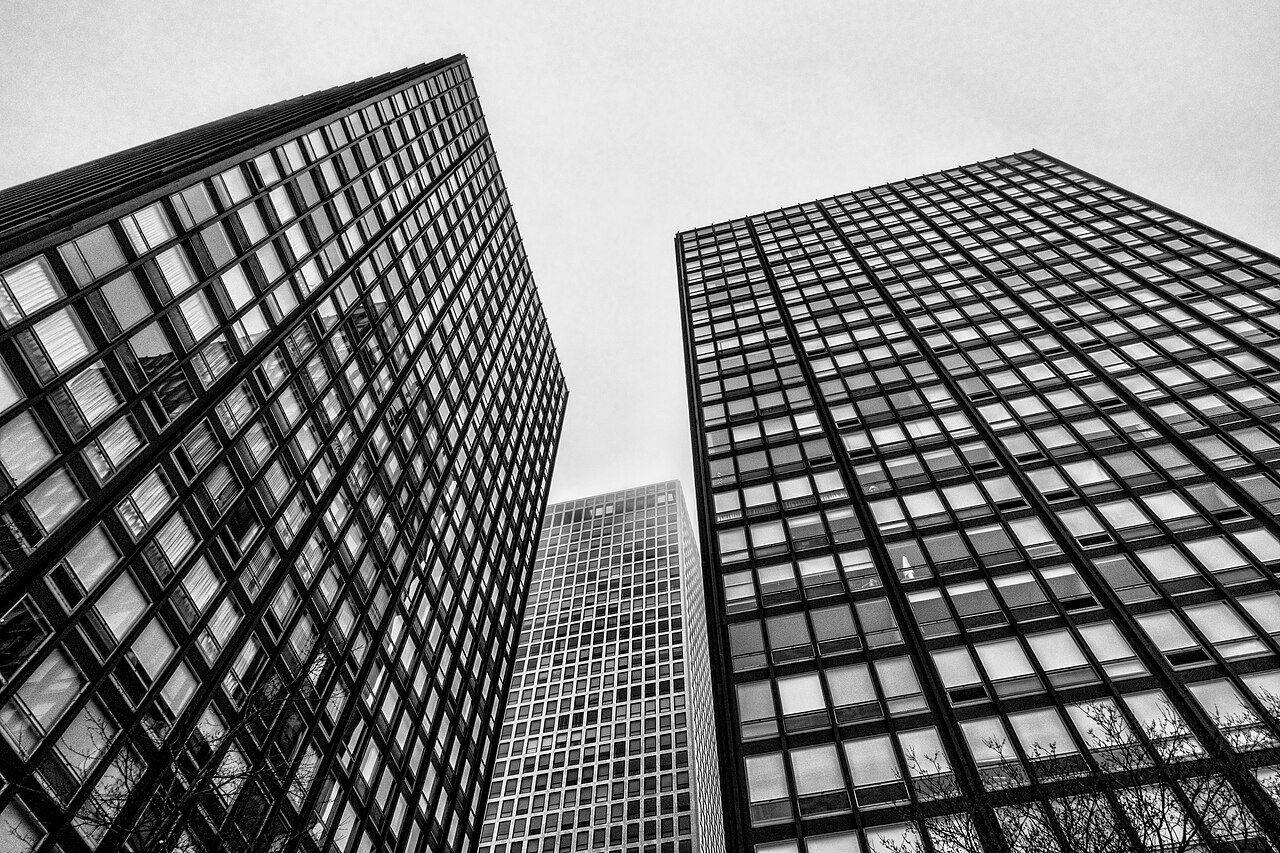
Mies believed in reduction. That meant stripping everything down to structure and letting the steel and glass be visible. Don’t fake material or add decoration that doesn’t serve a purpose.
His 860-880 Lake Shore Drive apartments, finished in 1951, are twin glass-and-steel towers on the lakefront. They look simple, but they’re actually meticulously precise. He added thin decorative I-beams to the exterior, not for structure, but to reinforce the vertical rhythm of the facade. He felt the glass-only version was too flat.
Walk past those towers, and you immediately get why every glass office building you’ve ever seen in any city looks the way it does. All of it comes from this.
The Corncobs, The X-Bracing, And The Race For The Sky
By DGriebeling – Chicago 169, CC BY 2.0, https://commons.wikimedia.org/w/index.php?curid=128609914
The 1960s and 70s brought a different kind of ambition to Chicago’s skyline.
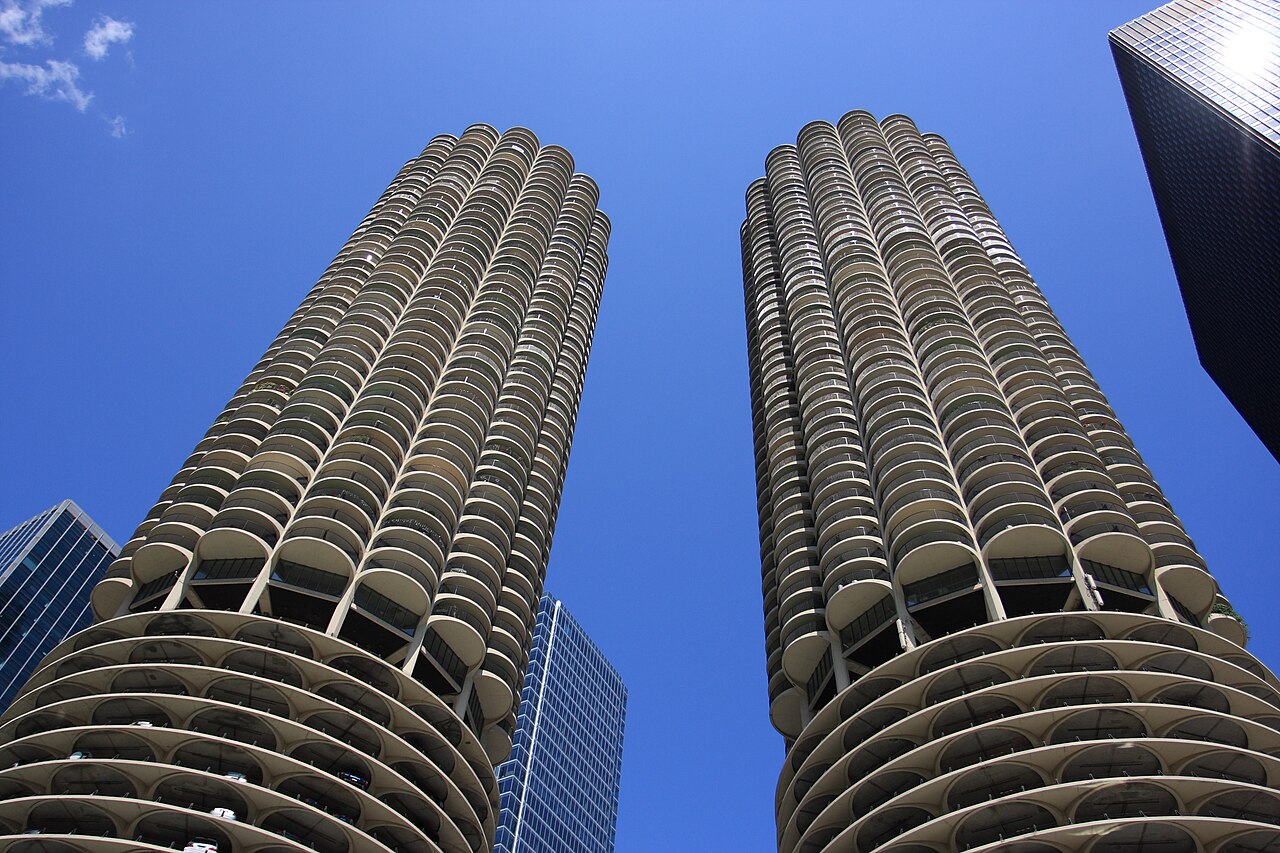
Marina City at 300 North State Street was completed in 1964. Architect Bertrand Goldberg designed two circular concrete towers that look exactly like corncobs. That’s what everyone calls them. His idea was a city inside a city: apartments, offices, a marina, a theater, a bowling alley, all stacked into one structure. The wedge-shaped units radiate out from a circular concrete core, which is why the balconies create that unmistakable scalloped pattern. The parking garage in the base has become one of the most photographed spots in Chicago.
The John Hancock Center at 875 North Michigan Avenue went up in 1969 at 100 stories. The most distinctive feature is the X-bracing on the exterior – enormous steel crosses running up all four sides of the building. It’s structural engineering made visible that looks decorative. The X-braces resist lateral wind loads, which at that height are significant, and doing it on the outside of the building freed up the interior floors for more usable space.
Then came Willis Tower, which most of us still call the Sears Tower. Finished in 1973 at 110 stories and 1,451 feet, it was the tallest building in the world for 25 years. Its engineers used a bundled tube system, nine square tubes of different heights sharing the structural loads. Standing at the base and looking up is an experience that photos just can’t capture.
Jeanne Gang And The Aqua Tower
By JohnPickenPhoto from Chicago, USA – Aqua building, Chicago, CC BY 2.0, https://commons.wikimedia.org/w/index.php?curid=129115726
Chicago didn’t stop innovating. The Aqua Tower at 225 North Columbus Drive, finished in 2009, is proof of that.
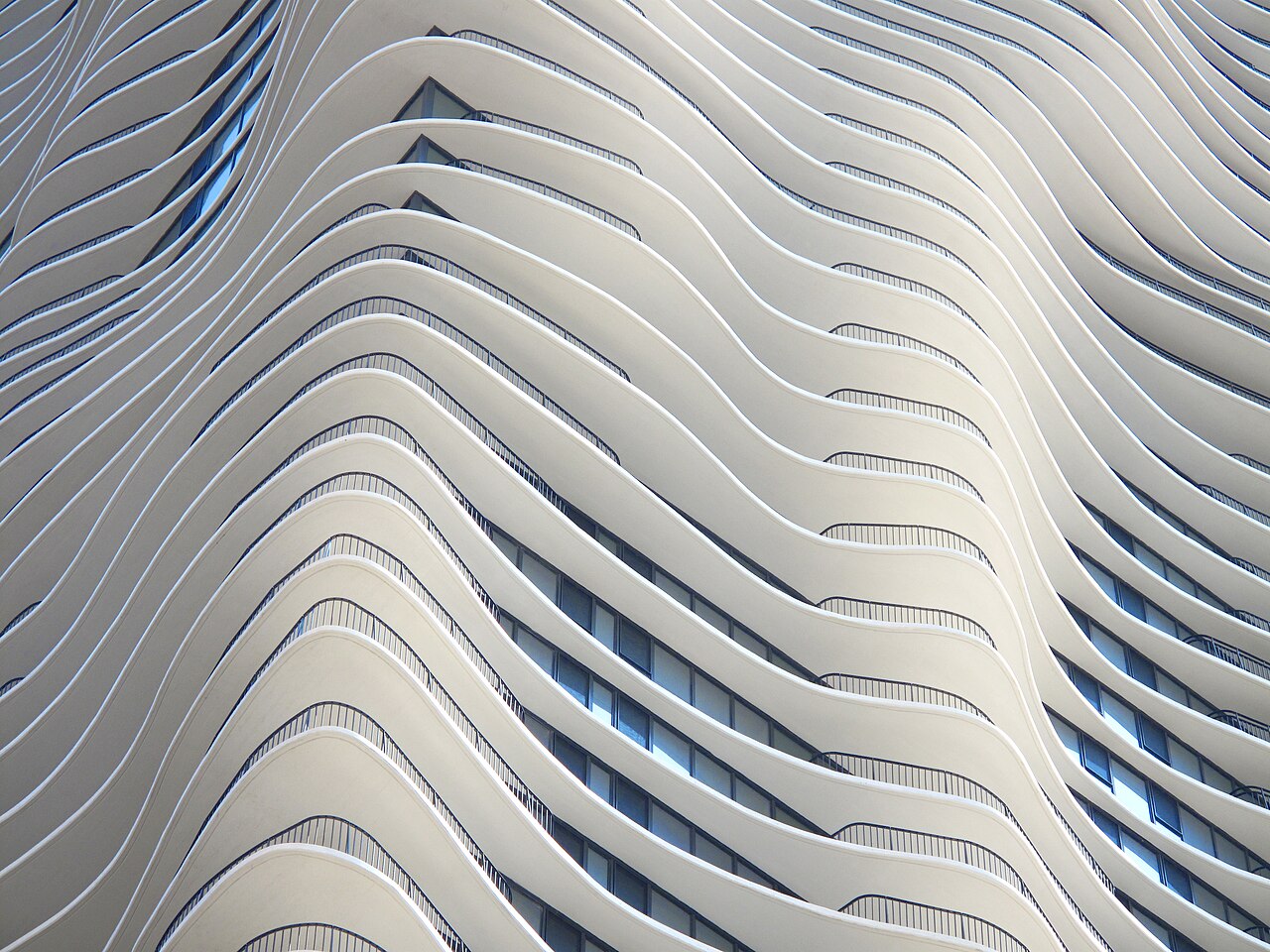
Architect Jeanne Gang designed it with concrete balconies that extend different distances on every single floor. No two floors are the same shape. The shape was driven by function: the irregular balconies create shade for the floors below, reduce wind load on the building, and improve views by angling residents’ sightlines past the neighboring towers. The building looks like it’s moving when you move past it.
She won a MacArthur Fellowship (the “Genius Grant”) for it in 2011. At 82 stories, Aqua is one of the tallest buildings ever designed by a woman.
The Best Way To See All Of It
The Chicago Architecture Center runs boat tours on the river that cover most of what we’ve written about here, in about 90 minutes. Departures are from the Michigan Avenue Bridge. It is one of the best tours in the city – we truly believe that. The guides are knowledgeable and the river gives you angles on these buildings that you simply can’t get from the street.
If you’d rather walk, the Loop is the most concentrated stretch of architectural history in the country. Give yourself 2 hours and walk. You don’t need a specific destination, just look up and take in the skyline.
If You’re Thinking About Living Here
So there you have it, a couple hundred years of architecture, from the ashes of 1871 to Jeanne Gang’s undulating concrete. We hope this article has inspired you to learn more about Chicago’s history!
And if you’re thinking about a move to Chicago or looking to buy, give us a shout, and we’ll help you figure out where in this city fits you best.
Stay curious out there, and see you next week!